
The ESCs cooperate on many levels, both within the framework of the European Union (EU) and within the broader international framework, for the purpose of forming joint positions capable of influencing EU and national policies, as well as the activity of private actors in each country. Examples include the Greek ESC's close collaboration with the European ESC and the other national ESCs in the EU member states, its membership in the International Association of Economic and Social Councils and involvement in the EuroMediterranean Partnership, cooperation with the countries of South East Europe etc.
Also, within the framework of its international relations, the ESC participates in international forums and meetings and welcomes delegations from all over the world to Athens.

Global Environment
In recent years, there has been strong movement toward close cooperation among Economic and Social Councils (ESCs) at a global level, as well as the development of their presence and interventions on the international stage.
The first International Meeting of ESCs took place in France in 1989, followed by meetings in Canada (1991), Burkina Faso (1993), Portugal (1995), Venezuela (1997), Mauritius (1999), Netherlands (2001), Algeria (2003), France (2005), China (2007), Hungary (2009), Italy (2011), Algeria (2013), Russia (2015), Dominican Republic (2017), Romania (2019), Russia (2021), Russia (2023) and Curaçao (2025).
AICESIS
The International Association of Economic and Social Councils and Similar Institutions (AICESIS) was founded in 1999 and held its first official meeting in July of the same year in Port Louis, Mauritius.
Initially, AICESIS comprised 24 members and 3 associate members. Today, it brings together institutions for social dialogue from 72 countries in Latin America, Asia, Africa and Europe.
The Economic and Social Council of Greece (ESC), as a result of its systematic preparation, was elected Member of the Board of Directors of AICESIS for the 2009-2011 period. In 2009, Dr. Martha Theodorou, Head of Public and International Relations of the ESC of Greece, was appointed Chargée de Mission for AICESIS’s international communication. The ESC’s active role in the Association led to its re-election to the Board of Directors for the 2011-2013 period.
In 2014, an International Conference was organized in Athens (Zappeion Megaron), in collaboration with AICESIS, on the topic “Social Dialogue and Industrial Relations: What are the Solutions and What is the Role of Economic and Social Councils and Similar Institutions in a Changing Global Environment?”.
In 2017, the ESC of Greece, the International Labor Organization (ILO) and AICESIS co-organized an International Conference on Social Dialogue and the Future of Work in Athens. The same year, the ESC of Greece was re-elected to the Board of Directors of AICESIS and its Secretary General, Mr. A. Xyrafis, was elected Deputy Secretary General for Europe.
In 2022, the AICESIS Plenary Session was held in Athens.
In 2023, the Economic and Social Council of Greece, the International Labour Organization (ILO) and AICESIS co-organized an International Conference in Athens on “The role of social dialogue and its institutions in combating inequalities in the world of work”.
In October 2025, during the statutory meetings of AICESIS in Curacao, Mr. Ioannis Paidas, President of the Economic and Social Council of Greece, was elected President of the Association for the 2025-2027 period. Mr. Paidas presented the main working theme of the Greek Presidency entitled “Building Bridges for Just Transition and Global Social Justice” and promised the Members of AICESIS that the Greek Presidency will be marked by meaningful initiatives, transparency, inclusion, productivity and a strong commitment to the Association’s values.
UCESIF
The Union of Economic and Social Councils and Similar Institutions of Francophone Countries (UCESIF) is an international association of Councils from Francophone countries, working jointly on topical societal issues.
The ESC of Greece became a member of UCESIF in July 2011 and is actively engaged in developing relations with corresponding institutions in these countries.
In 2013, during the 10th General Assembly of the Union held in Athens, the Greek Council was elected to the Presidency of UCESIF for the 2013-2015 period. The Greek Presidency concluded in 2015 at the Plenary Session held in Rabat. In 2019, Mr. Apostolos Xyrafis, Secretary General of the ESC of Greece, was elected its Vice-President.
In 2023, Mr. Ioannis Paidas, President of the ESC of Greece, was elected Vice-President of UCESIF.
In 2025, Mr. Ioannis Paidas, President of the ESC of Greece and newly elected President of AICESIS, is ex officio Vice-President of UCESIF.
Bilateral Cooperation
The Greek Council believes that communication and cooperation with corresponding institutions worldwide, alongside the signing of Cooperation Protocols with Councils from other continents, present new opportunities for the development of cooperation on a privileged basis for the country.
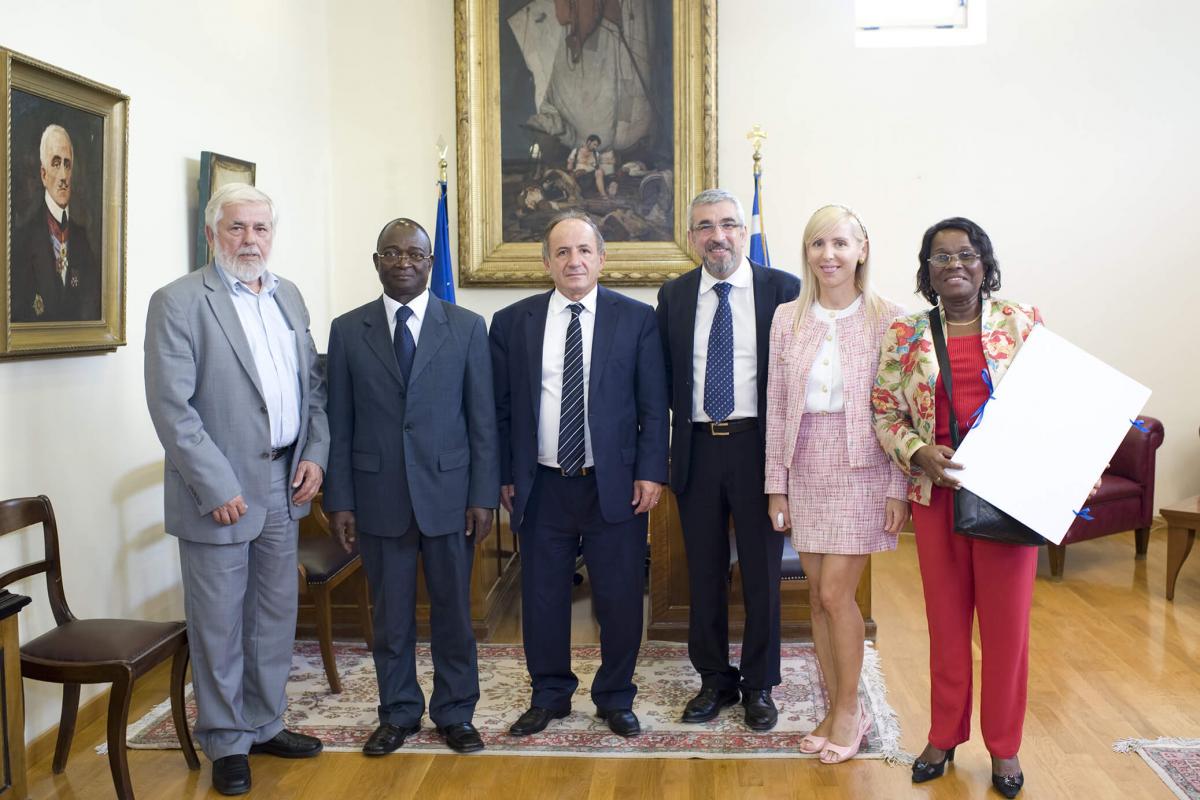
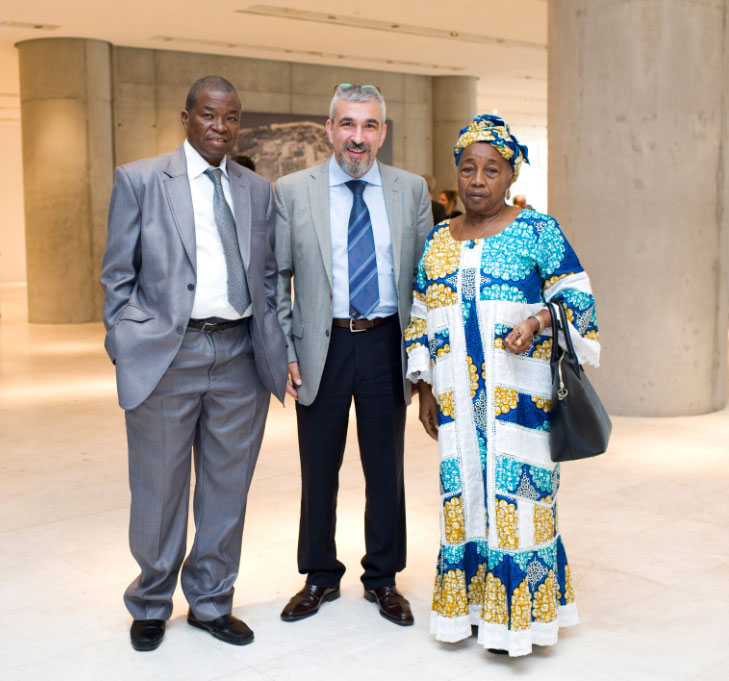
Several relevant initiatives have already been implemented and numerous others are underway with Councils from South America, Asia and Africa.
Cooperation with the ESC of Jordan
Cooperation with the ESC of Armenia
Cooperation with the ESC of Brazil
Cooperation with the ESC of Israel
Cooperation with the ESC of Benin
Cooperation with the ESC of Morocco
Cooperation with the ESC of Guinea
Cooperation with the ESC of Algeria
Cooperation with the ESC of Gabon
Cooperation with the ESC of South Korea
Cooperation with the ESC of Romania
Cooperation with the ESC of Serbia
Cooperation with the ESC of Bulgaria
Cooperation with the ESC of Ivory Coast
Cooperation with the ESC of Zimbabwe
Cooperation with the ESC of Russia
Cooperation with the ESC of the Central African Republic
Cooperation with the ESC of Mali
|
Cooperation with the ESC of Morocco
|
|

|
Cooperation with the ESC of Gabon
|
Cooperation with the ESC of Guinea
|
European Environment
The upgrading of the role of the Economic and Social Committee of the European Union in the Treaty of Amsterdam and the particular emphasis given in Europe to issues of social consensus on economic and social policy, constitute important components of the European environment of the ESCs.
In the context of the Greek Presidency of the European Council in 2014, the ESC participated in the programme of activities of the Presidency with three thematic events where the issues of the Europe 2020 strategy, digital convergence and the migration strategy were developed.
In 2018, the ESC organized, in cooperation with the EESC, a major event on the Future of Europe in the Hellenic Parliament, with the participation of the EESC President, Mr. George Dassis.
In February 2025, the President of the EESC, Mr. Oliver Röpke, visited the ESC of Greece and participated in the 5th Meeting of the "Erasmus of Civil Society" project. In May of the same year, Mr. Röpke participated as a keynote speaker at an ESC event in Thessaloniki on the housing issue.
Annual Meetings of the Presidents and the Secretaries General of the EU Economic and Social Councils
Enhancement of the role of the Economic and Social Committee of the European Union (following the Treaty of Amsterdam) and the particular emphasis placed in matters of social consensus for economic and social policy are important components of the European environment of the ESC. The ESC of Greece has played an important part within the European environment.
In 1997 the ESC of Greece organized the Annual Meetings of the Presidents and the Secretaries General of the EU Economic and Social Councils. Since then, it has taken an active part, with interventions and proposals, in all the meetings, and has developed a very good level of cooperation with all the national ESCs.
The Annual Meeting of the Secretaries General of the EU Economic and Social Councils and the EESC took place in Athens (the Acropolis Museum) in April 2013. The Annual Meeting of Presidents and General Secretaries was held in Athens on 14 and 15 November 2013, where representatives of 16 Economic and Social Councils (ESCs) of European countries and the European Economic and Social Committee (EESC) adopted a Common Declaration.
The Euro-Mediterranean Partnership
The Euro-Mediterranean Partnership, as a multifaceted relationship, began to develop within the framework of the European Union, beginning at the 1994 European Council in Corfu. Before that, there had been cooperation agreements with countries of the Mediterranean basin, but they were on a bilateral level. One of the basic objectives of the ESC's Euro-Mediterranean Partnership is to promote decentralized action, i.e. the action of non-governmental agencies in planning programmes to be financed by the European Union.
In the context of this policy, it was decided to convoke the Barcelona Conference on 27-28 November 1995, with the participation of the Foreign Ministers of the EU and another 12 Mediterranean states: Egypt, Algeria, Jordan, Israel, Cyprus, Lebanon, Malta, Morocco, Palestine (referred to as “territories” in official texts), Syria, Turkey and Tunisia.
Since the Barcelona Conference, Summits of the ESCs and associated organisations of the Mediterranean basin have been held: Madrid (1995), Paris (1996), Casablanca (1997), Lisbon (1998), Antalya (1999), Naples (2000), Athens (2002), Malta (2003), Valencia (2004), Amman (2005), Ljubljana (2006), Athens (2007), Morocco (2008), Alexandria (2009), Rome (2010), Constantinople (2011), Amman (2012), Barcelona (2013), Nicosia (2014), Brussels (2015), Athens (2016), Madrid (2017), Torino (2018), Barcelona (2019), Brussels (videoconference, 2020) and Marrakesh (2022).
Cooperation with the Countries of South East Europe
One of the initiatives undertaken by the Greek ESC on the european level has been to hold meetings of the social partners from the countries of South East Europe. The first event was held in Thessaloniki in 1997. Following this, the ESC issued an own-initiative opinion on the subject of “Social Dialogue in South East Europe” (April 1999).
In January 2000, together with the European Economic and Social Committee and the Royaumont Process, the ESC organised a conference entitled “Civil Society, Democratisation, Participation and the Stability Pact for South Eastern Europe” in Thessaloniki. It was followed in September 2002 by the Final Meeting on the “Thessaloniki Process” Action Plan.
In December 2006 the ESC organized in Thessaloniki, together with the European Economic and Social Committee, a Conference of the institutions for social dialogue of South East Europe entitled “The Role of Economic and Social Councils and Similar Institutions in the EU Accession Process and the Implementation of the Lisbon Strategy.” The ESC has also developed a series of bilateral contacts with the countries of South East Europe.
The “CESlink” Project
In 2000, the European Economic and Social Committee and the national ESCs set the common goal of creating a central information point enabling the broader public to get to know them and their tasks better. The new Internet technology was considered to be the best tool for achieving this purpose. As a result, the need for broader cooperation between the European ESC and the national ESCs became apparent. Thus Project “CESlink” came into being.
The Project started with the creation of a working group of the European ESC and the national ESCs, which was later named the “CESlink Group.” This group meets at regular intervals and monitors, develops and expands the initiative.
In 2006 Dr. Martha Theodorou (ESC of Greece) was put in charge of the Communication Actions of the Project “CESlink”.
Future areas for development include strengthening the cooperation between the European ESC and the ESCs of the EU member states, encouraging and supporting the new EU member states and the members of the International Association of ESCs and similar institutions for their active participation in Project “CESlink,” strengthening the role of Project “CESlink” as a joint project of the ESCs, as well as monitoring and providing information on socioeconomic developments on the national and international levels.